
- 10 prompt engineering tricks that save 1-2 hours a day: context, role, output format and more, each with a full before/after example. Works in ChatGPT, Claude and Gemini.
Prompt engineering is the art of writing instructions for AI so it returns exactly what you need, and it has more impact on output quality than your choice of model. The ten tricks in this guide, covering context, role, output format, examples, constraints and more, work across all major models: ChatGPT, Claude and Gemini. People who apply them consistently save hours every week and stop editing generic, off-target responses.
You're using ChatGPT or Claude but not getting the results you wanted? The secret isn't the tool. It's how you talk to it.
Prompt engineering is the art of phrasing: a good question equals an excellent result.
What Is Prompt Engineering?
Prompt engineering is the art of writing instructions (prompts) for AI so it returns exactly what you want.
The difference:
- 🔴 Bad prompt: "Write an agenda"
- 🟢 Good prompt: "Write a 30-minute agenda for a 5-person meeting, including a 5-minute break, for a sales team that needs to discuss quarterly goals"
10 Tricks That Will Get You Perfect Results
1️⃣ Context Is King: Give Background
The problem: AI doesn't know who you are or what you do.
The solution: Give context upfront.
❌ Before:
Write an email to my manager
✅ After:
I'm a B2B salesperson with 5 years of experience. I sell to tech companies in Israel.
Write an email to the CEO of a startup to request an introductory meeting.
Tone: professional but warm, not overly formal.
Impact: +300% better
2️⃣ Role Playing: Give AI a "Role"
The problem: AI writes like... AI.
The solution: Tell it "You are now..."
❌ Before:
Explain SEO
✅ After:
You are an SEO expert with 10 years of experience.
Explain SEO to a small business owner who knows nothing about it.
Use examples from Hebrew-language search.
Impact: +250% clarity and relatability
3️⃣ Format Matters: Specify the Output Format
The problem: AI returns prose when you need a table.
The solution: Say exactly how you want the answer structured.
❌ Before:
What are the differences between ChatGPT and Claude?
✅ After:
What are the differences between ChatGPT and Claude?

Return format:
| Feature | ChatGPT | Claude |
|---------|---------|--------|
| Speed | ... | ... |
| Accuracy | ... | ... |
| Cost | ... | ... |
Impact: +400% usability
4️⃣ Few-Shot Learning: Give Examples
The problem: AI doesn't quite understand what you want.
The solution: Provide 2-3 examples of what you're looking for.
❌ Before:
Translate these emails into professional English
✅ After:
Translate these emails into professional English.

Example:
Hebrew: "אני מעוניין לקבוע פגישה"
English: "I would like to schedule a meeting"

Hebrew: "בבקשה שלחו לי הצעת מחיר"
English: "Please send me a quote"

Now translate:
Hebrew: "מתי אפשר לדבר?"
Impact: +180% accuracy
5️⃣ Constraints: Set Boundaries
The problem: AI returns text that's way too long.
The solution: Specify limits (words, sentences, etc.).
❌ Before:
Write copy for a Facebook ad
✅ After:
Write copy for a Facebook ad for an AI course.
Constraints:
- Exactly 50 words
- Include a CTA (Call to Action)
- Use emojis strategically
- Tone: upbeat and motivational
Impact: +220% relevance
6️⃣ Temperature Control: Request a "Creativity Level"
The problem: Sometimes AI writes something boring, sometimes something over the top.
The solution: Tell it whether you want creative or factual output.
❌ Before:
Write a headline for an article
✅ After:
Write 3 clickable headlines for an article about ChatGPT.
Requirement: 70% factual, 30% creative.
Impact: +150% consistency
7️⃣ Chain of Thought: Ask It to "Think in Steps"
The problem: AI returns a wrong answer because it didn't think things through.
The solution: Say "think step by step" (Chain of Thought).
❌ Before:
Is this weight 5 million milligrams?
✅ After:
Is this weight 5 million milligrams?
Think step by step:
1. First convert to grams
2. Then convert to kilograms
3. Check whether the result makes sense
Impact: +300% accuracy
8️⃣ Persona and Tone: Give It a "Voice"
The problem: The text doesn't match your brand.
The solution: Define a persona and tone.
❌ Before:
Write a LinkedIn post
✅ After:
Write a LinkedIn post.

Persona: You are an AI lecturer in Israel with 10 years of experience.
Tone: Friendly, educational, Israeli English (misspellings OK)
Audience: Startup founders + HR leaders
CTA: Link to free consultation
Impact: +400% brand fit
9️⃣ Negative Prompting: Say What Not to Do
The problem: AI produces something you don't want.
The solution: Say "don't":
❌ Before:
Write copy for a product
✅ After:
Write copy for a product.

Do:
- Use benefits, not features
- Include social proof

Do NOT:
- Use technical jargon
- Exceed 100 words
- Skip the CTA
Impact: +250% on-brand
🔟 System Prompt: Give "System Instructions"
The problem: AI doesn't stay on track across a conversation.
The solution: Give a system prompt at the start.
❌ Before:
(You have to remind it of this every single response)
✅ After:
You are working for me as a personal AI assistant.
Always include:
1. A TLDR at the top
2. 3 action items at the end
3. A ⚡ symbol next to important details
4. Always respond in Hebrew

Now I'll start asking you questions.
Impact: +500% consistency throughout the conversation
Full Example: From Before to After
❌ Bad prompt:
Write a work plan
Result: Generic, not useful
✅ Good prompt:
You are a project manager at a startup.
Write a 3-month work plan for improving the website's SEO.

Requirements:
- 3 phases (Discovery → Implementation → Optimization)
- 5 specific tasks per phase
- Success metrics for each task
- Format: Markdown list with dates

Tone: Professional but encouraging
Audience: Dev team + CEO
Do NOT: Use technical jargon without explanation
Result: Perfect, actionable, team-ready
Comparison Table: Good vs. Bad
| Element | Bad Prompt | Good Prompt |
|---|---|---|
| Context | ❌ None | ✅ Full background |
| Role | ❌ Generic | ✅ Specific (e.g., "You're a...") |
| Format | ❌ Surprise me | ✅ Exact format specified |
| Examples | ❌ No | ✅ 2-3 examples |
| Constraints | ❌ Unlimited | ✅ Word count, tone, style |
| Tone | ❌ Whatever | ✅ Professional/casual/funny |
| Negative | ❌ Not mentioned | ✅ Clear "do NOT" list |
| Result | 🔴 50% useful | ✅ 95% useful |
Frequently Asked Questions
Q: How long does it take to master prompt engineering? A: One to two weeks of consistent practice. Every day your prompts will get better.
Q: Which AI is best for prompt engineering? A: ChatGPT, Claude and Gemini are all excellent, and every trick in this guide works across all of them. For a full comparison guide, see our AI tools comparison in Hebrew.
Q: Are there tools that help with prompt engineering? A: Yes. PromptHub, ChatGPT Advanced, Anthropic Docs, but the real leverage is in knowledge, not tools.
Q: Which prompt engineering techniques matter most? A: Context, role playing and format. Those three account for 80% of the improvement.
Your Assignment for Tomorrow
Take the worst prompt you use every single day. Upgrade it using any 3 of these tricks. See the difference for yourself.
Trust me, the improvement will be dramatic.
Common Prompt Engineering Mistakes
- A one-line prompt for a complex task. If you'd give a new employee a full-page brief, don't expect AI to get by on five words.
- Forgetting to specify the language. Without an explicit instruction, the model may respond in English or in stilted, awkward translated Hebrew. Write "respond in natural Hebrew", it changes everything.
- Giving up after one bad response. Working with AI is iterative: ask for a revision, add an example, sharpen the format. The third response is almost always better than the first.
- Copying prompts without understanding them. Templates from the internet are a starting point, but without your own context they produce generic content.
- Cramming everything into a single prompt. Large tasks are better broken into stages: research first, then a draft, then polishing.
The Next Step
Want to learn prompt engineering in depth, with live practice on your own real tasks? That's exactly what we do in our AI workshops for teams and private lessons, hands-on work with the actual prompts your business uses every day.
[Button: Book Free Consultation]
Frequently asked questions
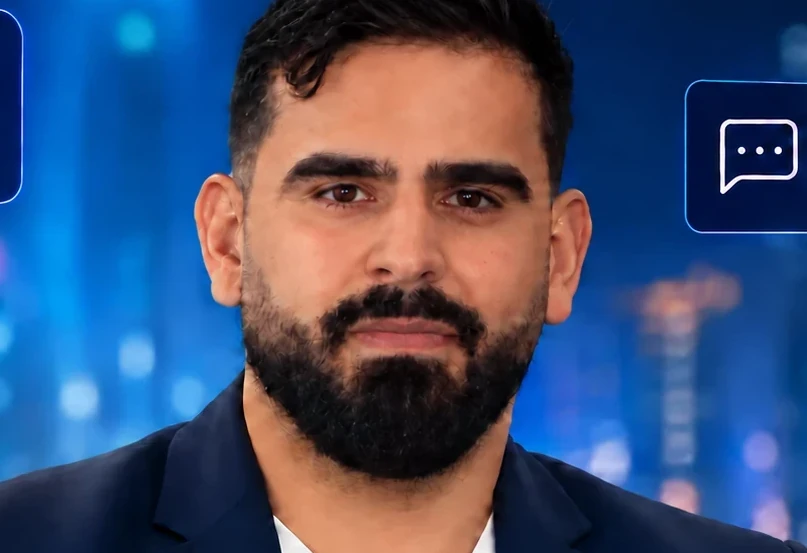
Yaakov Tzedek
An Israeli AI lecturer, consultant and implementer who has supported 100+ organizations in AI implementation and lectured for 200+. Official content partner of Meta, Google, Canva and TikTok, featured on Israel's Channel 13.
More about Yaakov →