
- Google DeepMind released Gemini 3.8 Flash, a fast model for code and agents at the same per-token price. But buried in the announcement: current pricing expires December 31, 2026, and both rates double on January 1, 2027.
Gemini 3.8 Flash is the third Flash model Google has released in roughly six weeks. Artificial Analysis clocked its output speed at around 305 tokens per second, the fastest ever recorded there. Google is no longer working in big annual updates. It is shipping improvements on a near-continuous basis.
The price per token hasn't moved. The speed broke records. And yet, your AI bill could double in January. On September 2, 2026, Google DeepMind released Gemini 3.8 Flash, a fast model built for code, autonomous agents, and long-horizon tasks. Most of the coverage chased the speed benchmarks and performance numbers, but the line that will actually show up on your invoice is buried deep in the announcement, and it has nothing to do with performance.
In short: The rate hasn't changed: $0.75 per million input tokens, $3.75 per million output tokens. But that pricing is only valid through December 31, 2026, and from January 1, 2027, both rates double. At the same time, reasoning models tend to consume more output tokens per task. Which means that even without the price list moving, you could end up paying more for the exact same work.
What exactly was released?
Gemini 3.8 Flash is a fast model aimed at agentic work: code, automations, and tasks that run over extended periods. According to Google's official model page, it comes with a one-million-token context window, up to 64,000 output tokens, and built-in tool support.
The interesting addition is adjustable thinking levels: low, medium, and high. You choose how much "thinking" the model invests in a task, and that is precisely where performance and cost meet. We'll get to that in a moment.
Here are the key specs at a glance:
| Feature | Gemini 3.8 Flash |
|---|---|
| Context window | 1 million tokens |
| Maximum output | Up to 64,000 tokens |
| Thinking levels | low / medium / high |
| Built-in tools | Supported |
| Output speed | ~305 tokens per second (Artificial Analysis measurement) |
| Input | $0.75 per million tokens (through December 31, 2026) |
| Output | $3.75 per million tokens (through December 31, 2026) |
On the benchmarks side, Google reports roughly a 6-point improvement on long-horizon code benchmarks compared to the previous generation. And the measured output speed of approximately 305 tokens per second is the fastest ever recorded by Artificial Analysis. In agentic tasks, where every step waits on the previous one, that kind of speed compounds into real time savings across an entire workflow.
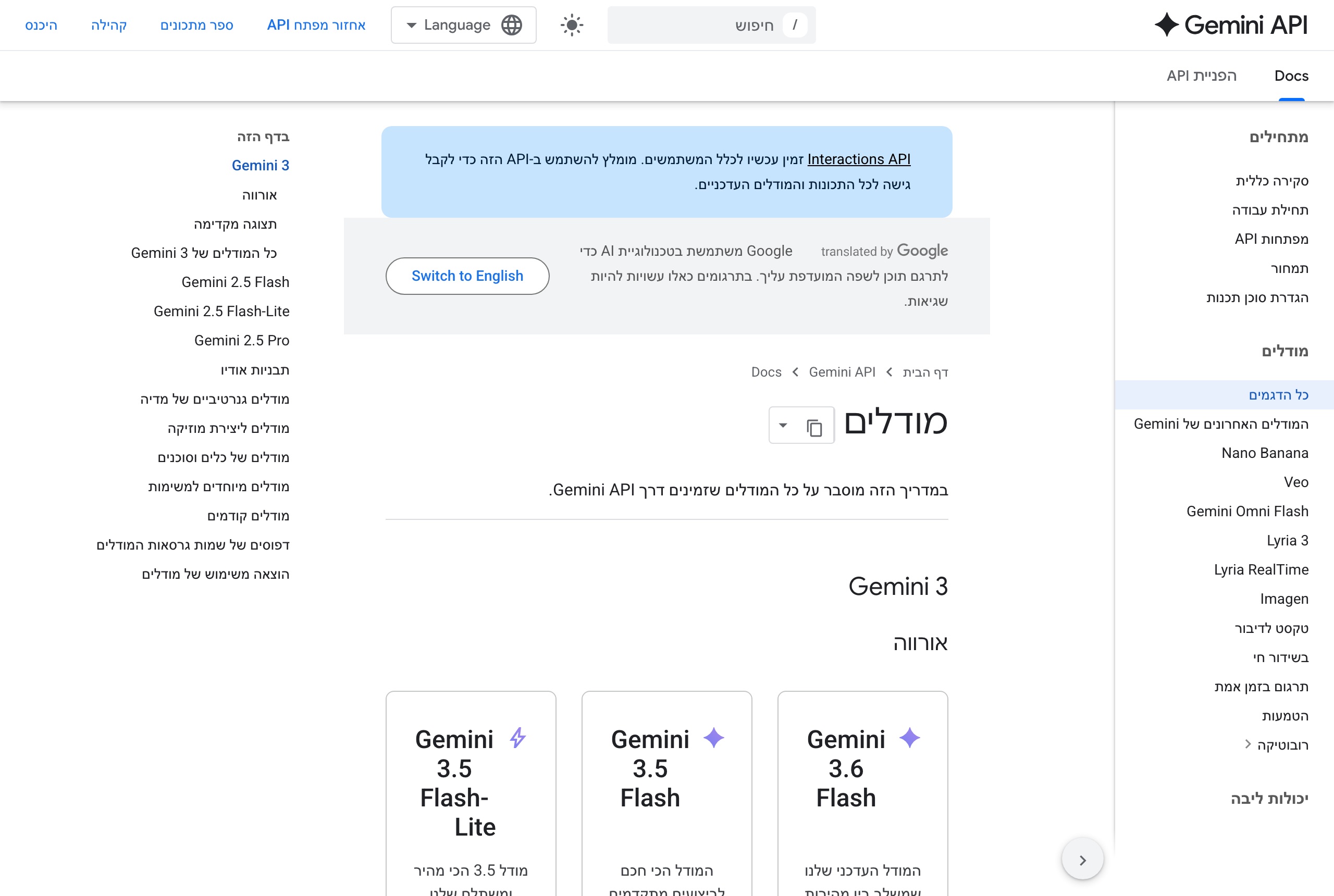
Screenshot: Google AI for Developers
How much does it cost? Here's the line everyone is missing
The rate is identical to 3.7 Flash: $0.75 per million input tokens and $3.75 per million output tokens. But those prices are only valid through December 31, 2026. From January 1, 2027, both rates double: $1.50 for input and $7.50 for output per million tokens.
This is a move worth reading carefully. Google is essentially giving the market one quarter of introductory pricing, and anyone who builds a full system today based on September cost calculations will find their API bill doubled in January without changing a single line of code.
For anyone managing an AI budget, this is a concrete decision point: every 2027 cost forecast built on the current rate is simply wrong. Plan ahead, or get surprised by the January invoice.
Let me illustrate with a simple numerical example. Say an agent processes a request with 20,000 input tokens and 4,000 output tokens: today that is roughly 3 cents per request, meaning about $300 for 10,000 requests a month. The exact same load in January 2027 will cost around $600. Nothing changed in the code, the prompts, or the usage. Only the date changed.
Why can a task get more expensive even when the price per token stays fixed?
Because with reasoning models, you pay not just for the answer, but for the path to it. The model's reasoning steps count as output tokens for billing purposes, and output tokens are the expensive part of the pricing structure.
This is a general principle of the current model generation, not something specific to Google: when a model "thinks" more to reach a better result, it consumes more tokens for that exact same task. The result can look strange to anyone who only looks at the price list: a new model at the same price per token, and a higher monthly bill.
That is why Gemini 3.8 Flash's adjustable thinking levels are not just a nice feature, they are a cost-management tool. Routine task at low, complex decision at high, and not everything on maximum by default.
This connects back to the first point: if your tasks consume more output tokens because of reasoning, and in January the output token also doubles in price, the two effects multiply each other. Anyone who isn't measuring both right now will have a hard time explaining the invoice six months from now.
What does Google's pace tell us?
This is the third Flash model in roughly six weeks. Google has moved from a model of annual mega-launches to nearly continuous improvement, version after version, at a pace that resembles regular software updates more than model announcements.
For users, that is excellent: improvements arrive fast. For businesses, it means something additional: you can no longer lock in a "our model" decision once a year. Enterprise AI infrastructure needs to be built for model swapping, with ongoing measurement of cost versus value, because the landscape shifts every few weeks.
And it's not just Google. Anthropic released Fable 5.1 less than three months after Fable 5, and the same pattern repeats across all the major providers. This generation of models updates at the pace of an app, not at the pace of an enterprise software release.
Gemini Flash vs. Claude: who fits what?
The short answer: every model has its place, and anyone trying to crown a single "winner" is simply asking the wrong question.
Flash is built for volume and speed: classifying requests, processing documents in bulk, agents running many small cheap steps. When a task repeats thousands of times a day, roughly 305 tokens per second and a low rate are exactly what you need.
Heavyweight models like Claude Fable 5.1 operate on a different playing field: tasks where a mistake costs real money, complex code, analysis that requires depth, long agentic work that needs to hold context and exercise judgment. You pay more per token there, and you gain fewer corrections downstream.
The practice I see at mature organizations is routing: each type of task gets the cheapest model that meets its quality threshold. That is not a vendor choice, it is an architecture decision.
A real-world example: a customer service system can classify and tag every incoming request with a fast, cheap model, and route only sensitive cases, a legal complaint, a major client threatening to leave, to the heavyweight model. That way 90% of the volume runs at minimal cost, and the 10% that actually matter get the best judgment available. Both models win, because each one does what it was built to do.
How do you check what a model actually costs you?
The only metric that matters to a business is cost per task, not price per token. Here is a testing process you can run this week:
- Define a representative task. Not a generic benchmark, but your task: summarizing a sales call, drafting an email, analyzing a document. Run it 20-30 times on real data.
- Measure actual consumption. Every API provider returns the number of input and output tokens consumed with each response, including thinking tokens. Don't estimate, measure. Multiply by the rate and you have a real cost per task.
- Set limits and alerts. A monthly budget at the key or project level, and an alert when you cross a defined percentage of it. Invoice surprises are always the result of measurement that wasn't there.
- Re-check with every model swap and every rate change. A task that cost pennies on one model can cost several times more on a reasoning model, and the January 2027 doubling is a reminder that the price list itself is a variable, not a constant.
And when is Flash enough? When the task is structured, repetitive, and has a forgiving error threshold. When do you need a heavyweight model? When the output goes to a client, a contract, or a management decision with no human in the middle. The practical rule: start with the cheap model, move up only where quality falls below the threshold.
What does this mean for your business?
Three bottom lines:
- If you are on Gemini, mark January 1, 2027 in your calendar. Your 2027 cost projections need to be built right now on the doubled rate, not on the introductory rate.
- Stop comparing price lists, start measuring tasks. Price per token is a marketing number. Cost per task, including thinking tokens, is the number that appears on your invoice.
- Build for portability, not loyalty. Three Flash models in six weeks means the market moves fast. An architecture that makes it easy to swap models is worth more than any temporary discount.
If you want to build this measurement and routing into your organization's systems, in practice rather than in theory: a hands-on AI workshop for your organization, where I work through your real workloads with your team and match a model to each task. And for individuals who want personal guidance building this kind of process, there is a one-on-one private lesson where we do it on your specific project.
Want to take control of your AI costs yourself?
Everything you've read here, from measuring cost per task to smart routing between models, starts with understanding how the machine works from the inside rather than guessing. The intro session of the Claude Code workshop meets for three hours on September 16 at 9:00 PM, and together we build a real system from scratch, with no coding background required. If the question "how much is this costing me" is bothering you, this is the place to turn it into an answer you control yourself. Participation is free, and if it's not for you, you'll leave with one evening's worth of new understanding about AI.
Join the Claude Code workshop intro session
Sources: Official model page, Google AI for Developers · eesel AI pricing analysis · Artificial Analysis speed measurements
Frequently asked questions

Yaakov Tzedek
An Israeli AI lecturer, consultant and implementer who has supported 100+ organizations in AI implementation and lectured for 200+. Official content partner of Meta, Google, Canva and TikTok, featured on Israel's Channel 13.
More about Yaakov →